
As we wrap up a full year of 30th anniversary celebrations, we want to share one final story—one that represents a pivotal shift in how Manatee Habitat builds homes. It’s the story of innovation, environmental responsibility, and one man’s dedication to making Habitat homes smarter, stronger, and greener.
When Bruce Winter became the Construction Manager for MC Habitat 16 years ago, he was given a clear mandate: Go green! At that point, the Washington Park community was near completion with what became the last of the wood-framed houses, and it was Bruce’s responsibility to imagine building the next generation of homes, energy efficient but on a budget.
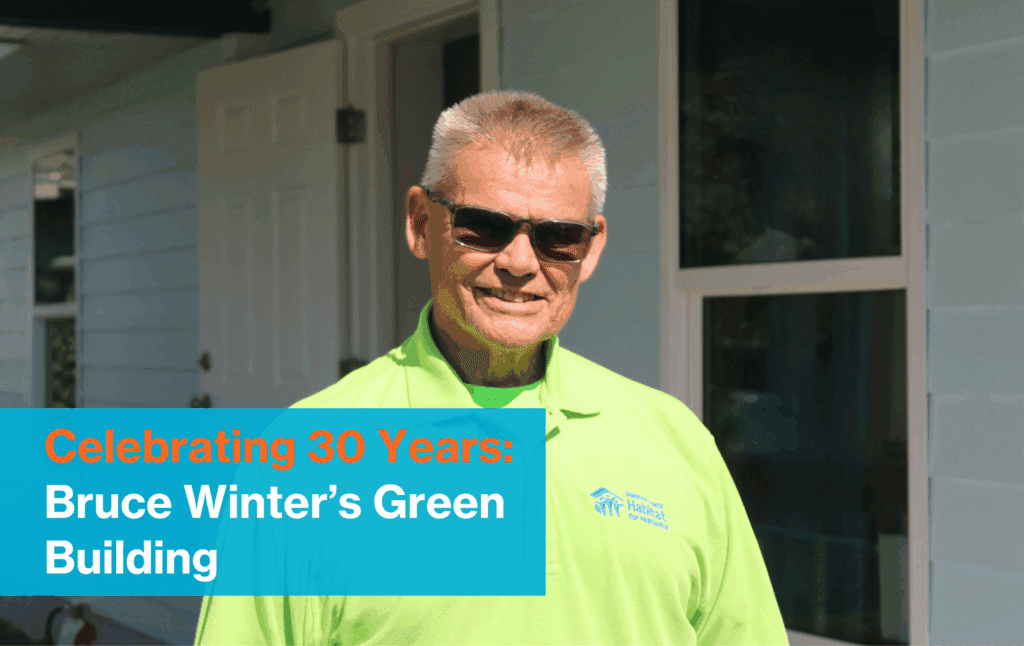
“When I started, I asked, ‘How green do you want to be?”. The answer was ‘As green as we can afford.’’” A year later, the new design took shape with Insulated Concrete Form (ICF) blocks defining the new homes at Hope Landing, kicking off a series of groundbreaking improvements in green building.
Prior to 2010, our Manatee Habitat homes were built according to Florida code and featured wood construction, vinyl siding, asbestos shingles, and blow-in insulation. After talking to energy efficiency experts, the building team identified new strategies, products, and suppliers. “We saw what would work and what wouldn’t work, on paper, and we had time to refine before we started building.”
Using ICF blocks led to more effective air barriers, and six inches of poured concrete in the middle of the window frames minimized temperature swings. Other changes included:
- Energy-efficient Structural Insulated Panels (SIP)
- Hardi plank siding needing repaint only every 15 years
- Spray foam insulation to cool the attic
- Metal roofing that lasts a lifetime
The math made sense, Bruce recalls. “At Hope Landing, the green homes we built were only 8.5% more expensive than structures built to Florida building code, which translated to less than $4 per month difference.” But there was a big financial upside to going green. For example, a typical electric bill of $120-140 was now $40 to $60 per month, the maintenance costs were much lower, and water usage was reduced. What’s more, 90% of the materials were made in America, sourced within 500 miles.
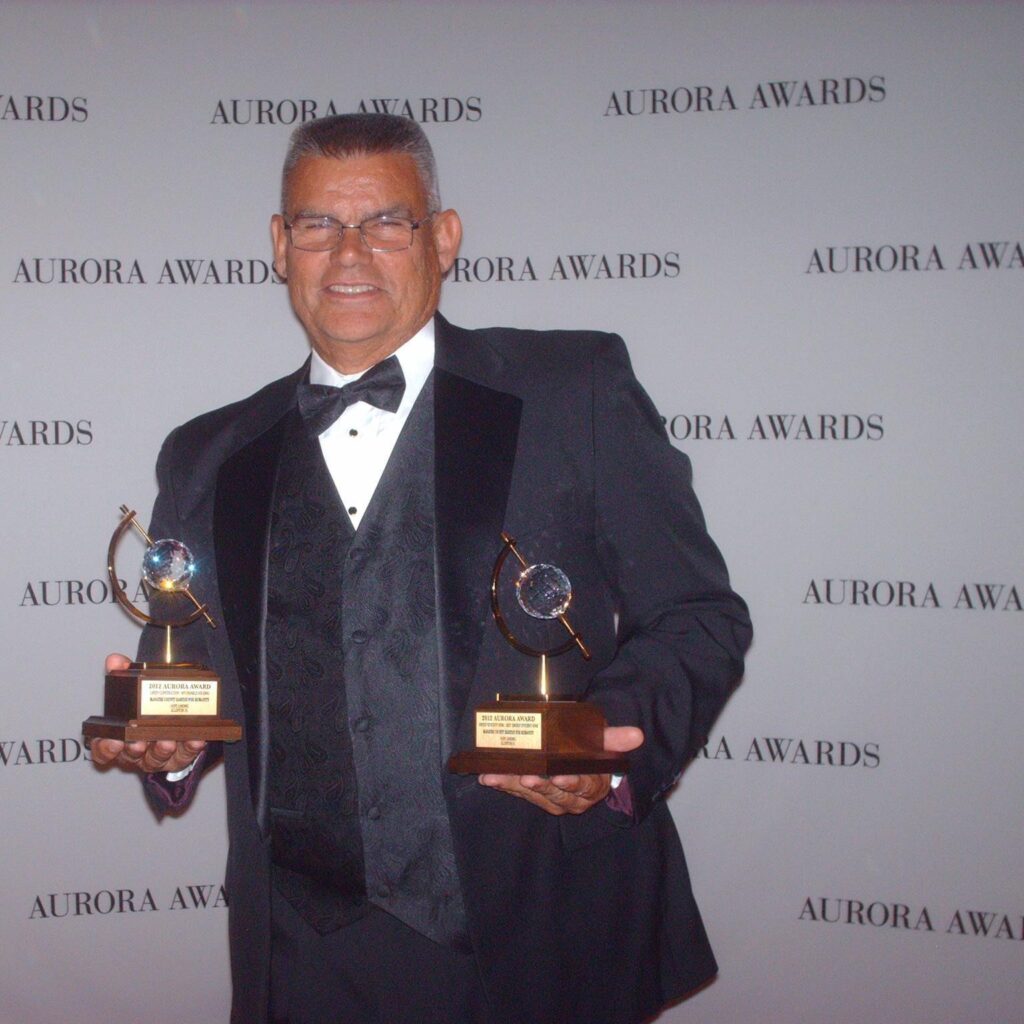 The Manatee Habitat experiment became news when the Florida Green Build Association and the US Green Build Coalition recognized the Hope Landing efforts. They awarded the Habitat team for creating the first Platinum Level residence in Manatee County, based on energy efficiency evaluations. Then, in 2013, the Environmental Protection Agency (EPA) took notice, calling Bruce to say: “We heard you’re building quite a house in Florida.” At their urging, the Habitat team submitted its shared wall home design for the EPA’s Housing Innovation Award in Manatee County – and, not surprisingly—we won!
Bruce’s commitment to solid construction and good environmental practices grew over the years. “I’ve been on construction sites since I was four years old, pounding nails in the floor.” Early in his career, he got an unusual job—in Antarctica. Stationed there as the Facilities Manager for ITT, he was able to witness climate change in real time. When he joined the Sarasota Habitat organization in 2004, he saw that building practices were a major contributor to global warming. “I thought, if we’re going to build, it’s gotta be green.”
Last year, Bruce, age 75, stepped down from his role as our Director of Construction, yet he remained laser-focused on completing Poling Gardens and helping launch the work at Kings Cross Place. There, the building teams will work with a new floor plan, constructing a four-bedroom model (including a garage and roofed lanai) while retaining the green building practices that have been so successful. As he makes the transition to three days a week, he is looking forward to the challenge.
Taking the reins from Bruce is Steve Reinfeldt, now serving as Vice President of Construction for Manatee Habitat. With deep respect for Bruce’s work and a shared commitment to sustainable building, Steve sees this next chapter as one of growth and innovation rooted in a strong foundation.
“Bruce built more than homes—he built a culture of excellence and forward thinking,” Steve shared. “As we look ahead, we’re committed to honoring that legacy by continuing to push boundaries in green, resilient construction. Every home we build is an opportunity to do better—for the families we serve and for the planet.”
All told, Bruce estimates that he’s helped build 150 new homes, made more affordable because of all the major and minor construction decisions that went into them. But energy efficiency milestones are only one aspect of his legacy. His proudest moment? Meeting a young woman who remembered him building her Habitat home when she was a child. “If I hadn’t lived in that Habitat home,” she told him, “I would never have gone to college. That house changed our lives.”
As we close this chapter and begin our next, we carry forward the legacy of people like Bruce, the innovations they pioneered, and the lives that continue to be transformed—one green home at a time.